
Examples of Ricky's previous work
This page showcases some of my previous work, both commercial as well as personal projects.
The ones more relevant to Digital Dissent are up top so that you can see my capability as a solo dev on short games made in a quick time for the public, and lower down the page are wider examples for variety and history.


A retro arcade game designed for the Outer Space: Stromlo to the Stars exhibition celebrating 100 years of Mount Stromlo Observatory.
Based on real science and technology at the Observatory, players shoot away space junk before it hits the Earth.
Solo developed by Ricky Vuckovic
Unity 2023, Built-in render pipeline
Pixel art by me with a combination of Photoshop and Aseprite.
Main level environment was based on photography supplied by CMAG of the real EOS laser facility on Mount Stromlo that the game is based on.
Space junk was a mix of hand-drawn items by me, plus some basic 3D shapes I made and captured frames of while rotating them, then tracing and recolouring in Aseprite.
The arcade table was supplied by CMAG, as was the mini “DreamQuest Pro 2022” Windows PC to run the game. My first deliverable a couple of weeks into production was a basic video, sound, and button testing app to ensure the game I made would actually run on the machine.
The whole project was made in 2 and half months from quote acceptance to delivery and testing on site a week ahead of schedule.
Guide Star was played by tens of thousands of visitors over a 12 month period with no software failures. A kid once ripped the physical arcade stick off the table, but we flipped the table around to use the second player’s controls and remapped the buttons quickly that same week, including recolouring the on-screen UI buttons to match the physical 2P controller.
I also wrote and produced 6 synthwave music tracks for the game in FL Studio.


Postcard is a short playable technical demo where you walk around photorealistic 3D scans of real world places.
Each environment in the game has been captured from the real world including its lighting, ambient sounds, and even the crunches of gravel and steps on concrete were recorded from the real location.
Solo developed by Ricky Vuckovic
Unity 6, HDRP
Environments were created by recording 15 minutes of continuous footage per real world location on an iPhone 16 Pro (just video, no LiDAR) or GoPro Hero 11. Gaussian Splat processing through Teleport, collision mesh through Polycam. 360-degree HDRI processed by HDReye for image-based lighting on the characters. Gaussian Splat importer for Unity by p-aras on GitHub.
In HDRP, splats are rendered after normal 3D processing is done, separating the render process completely from the character. To blend the character and environment, image-based lighting captured from the locations helped with colour and intensity, and I wrote a basic shadow matte shader to overlay the character shadow onto the collision mesh. As the scan has shadows baked in, I hand-masked the environmental shadows out of the shadow matte.
Menu music created by me in FL Studio.
Realistic 3D scanning of 8 ancient artifacts from the ANU Classics Museum, plus a touchscreen exhibition piece for a new program opening evening.
Solo developed by Ricky Vuckovic
I scanned each artifact by taking 200-300 photos at various angles, and processing through Agisoft Photoscan. Some clean up and simplification of the photogrammetry mesh in Meshmixer.
The touchscreen app was made in Unity 5, and developed for an all-in-one Windows machine I supplied for the event.


I made TowerClimb for the CanDev Canberra Games Game Jam, July 2024.
48 hours (can be spread over a week) to make a game that had to include “Canberra” in some way.
Solo developed by me, though leaning on some asset packs for some of the background tiles either to use nearly as-is, or as a reference for what sort of tiles I should probably draw to have a complete environment.
This was the first 2D platformer I had ever made in Unity, aside from a small experiment a month earlier as part of a YouTube tutorial I watched. I was playing a lot of Celeste at the time, so when the game jam was announced I really wanted to make something similar. Instead of a double jump or dash move, I wanted to make a leap and grab mechanic, reaching back into my love of games like Flashback on the Amiga.
Although this is a 2D game, I created the main character in 3D and then animated them in iClone for the player’s actions, exporting animation frames to trace and colour in Aseprite. I also used the 3D character to pose the intro sequence shots.
I composed an adaptive soundtrack for the game which changes as you progress through the level. I also created the adaptive music engine code as that felt faster to achieve than learning FMOD within the 48-hour timeframe.
The game is set on Black Mountain Tower / Telstra Tower, and I took photos of the area for texture and palette reference material, plus I also recorded foley sounds onsite of birds chirping and my footsteps on various surfaces.
Developed in Unity 2023, Built-in render pipeline.


Pogg is a mobile game for young kids to learn words, objects, and actions.
It is built on the open question, “What should Pogg do now?”, and offers a Spelling mode for kids to type in words (type “run” and he runs, “cook” and he cooks, etc) as well as the Pictures mode that shows all the possible actions as colourful icons.
Pogg has been warmly received by kids, parents, and also by speech therapists and disability workers who work with kids with autism and language delays.
Almost solo developed by Ricky Vuckovic, with the exception of background landscapes which are hand painted by Celia Vuckovic.
Originally developed in Unity for iPhone 1.5,
updated periodically with whichever Unity version was current at the time.
The main character, Pogg, is a modified version of a Poser character asset, and the animations are made by me in Poser as well. Backgrounds are a mix of original handpaintings as well as stock imagery that I stylised in Photoshop.
Animations are composited in After Effects, and the soundtrack was composed in FL Studio.
There was an Android version for a while, but then I decided to support only iOS to keep things simpler, plus 95% of customers were on iOS.
First released 17 years ago, and still getting weekly sales today.

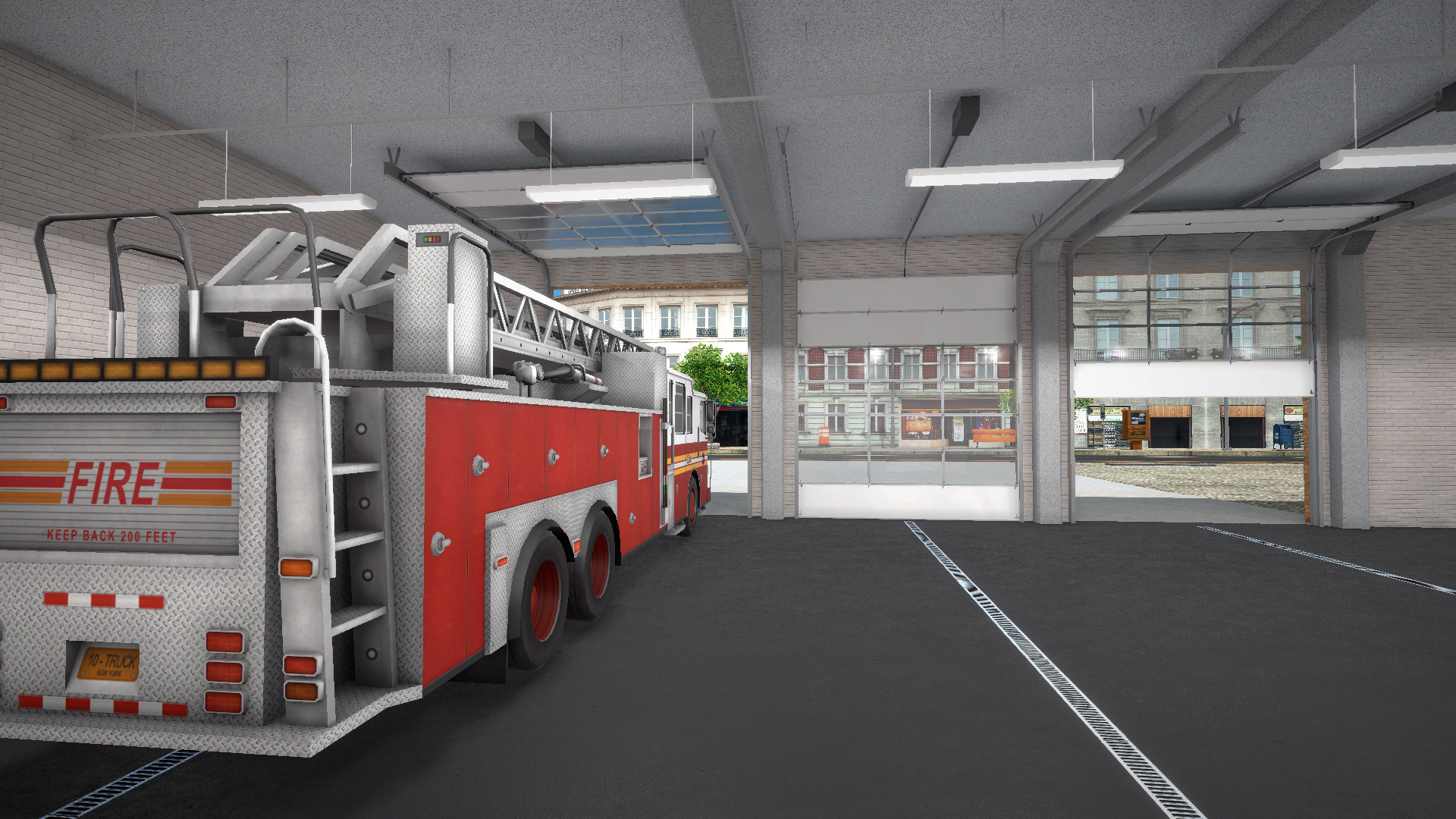

I solo developed this first responder’s virtual reality training simulator for a professional fire safety training company in the USA.
Designed to be experienced alongside a trained professional, participants in this simulation will learn appropriate fire extinguisher technique (the “PASS method”) and have a virtual household kitchen oil fire scenario to act on.
Some of the 3D environment assets are stock library items that I had arranged for the sim, based on the requirements laid out by my client.
Things I’m quite proud of are the invisible/natural allowance for left and right handed participants by simply reaching, grabbing, holding, and pulling with either (at a time when most VR experiences had an imposing UI choice for selecting dominant hand), as well as the behavior of the fire as it burns and spreads through the scenario, based on studying footage of house fires.
Engine used: Unity 5 and Unity 2017.
VR tech: HTC Vive and controllers.

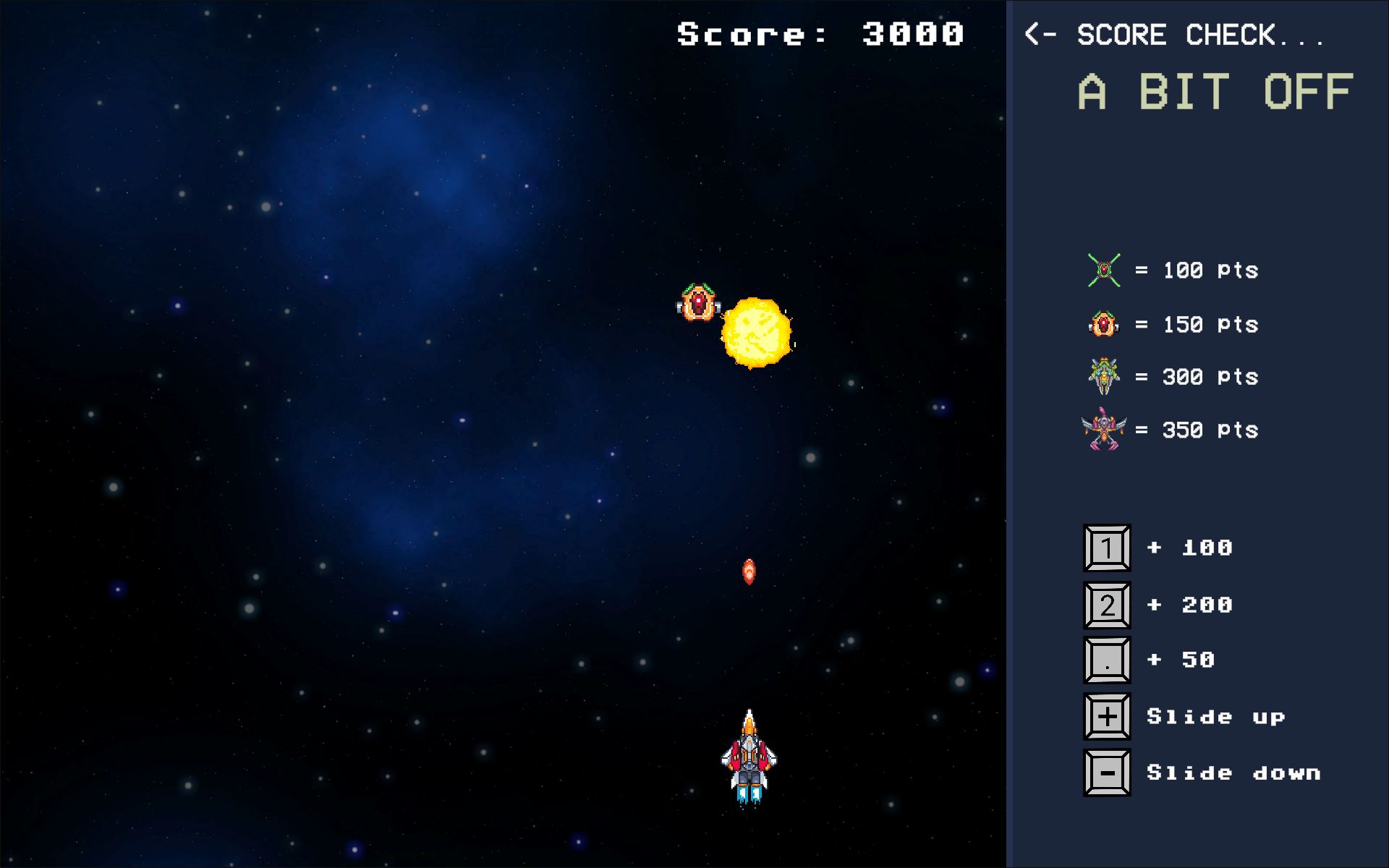


I made this for my first ever game jam, the GMTK Game Jam 2023, with the theme of “Roles Reversed”. It’s a 48 hour game jam, I decided to join 12 hours in, and submitted it with 5 hours still remaining.
Scoreboard is a game where the computer does all the playing, and you are in charge of making sure the points add up to an accurate score.
This game ranked #115 out of 6,686 entries for the category of Creativity, and #430 overall. Happy with that for my first jam 🙂
Made with Unity 2022 and the Built-in render pipeline.
Solo developed, if you allow for some library assets for the space graphics.
I also wrote 3 songs for the game’s soundtrack using FL Studio.


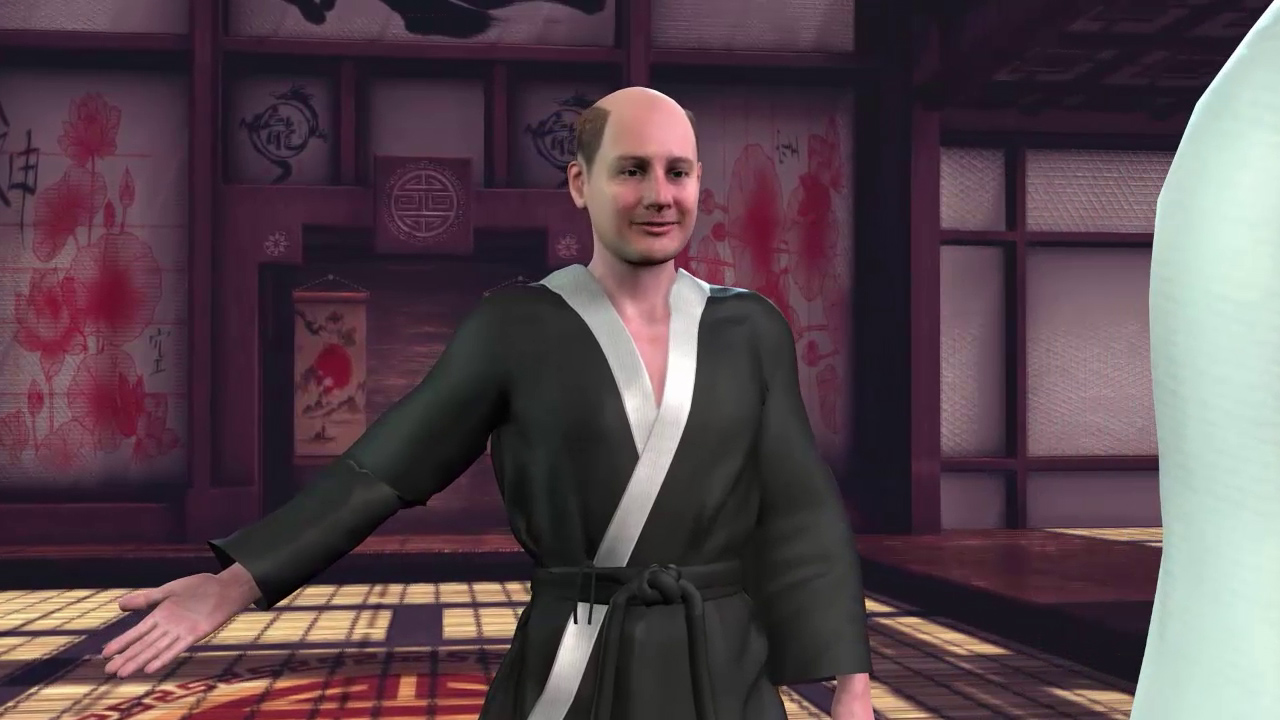
I made a mini action adventure game for a friend’s birthday that featured him as the main character and me as a supporting NPC.
It’s littered with references to games such as Horizon Forbidden West and movies like The Matrix.
I created game characters of us using Reallusion Character Creator and the Headshot plugin to help create heads based off reference photos.
Animated in iClone, including proper lip sync and hand-keyed facial animations for our voiced lines in the cutscenes (he had no idea why I had asked him to record a bunch of random lines, so points to him for doing it anyway).
Many environmental objects are Asset Store library stock.
Made with Unity 2022, HDRP.





I used to be a Macromedia Director guy a long time ago, working for small Canberran multimedia studios and eventually starting my own business.
Every hour is money, and I credit some of my solo development speed and ability to scope and deliver on time to my experience in these small creative businesses.
The bread and butter work was education and promotional information CD-ROMs and CD-Cards, though I started to get known as someone who could add fun minigames into corporate products to get higher engagement.
For people that want the nostalgia, tools included:
- Macromedia Director
- Macromedia Flash
- Photoshop 5.5 (eventually up to CS2)
- Premiere Pro, Final Cut Pro, and Media 100
- After Effects
- Dreamweaver
- Toast for making dual-boot Windows/Mac OS 9 and OS X discs
- Sorenson Spark compressor for QuickTime
- RealMedia Helix server, Windows Media Server
- FastTracker 2 and MadTracker
- CoolEdit
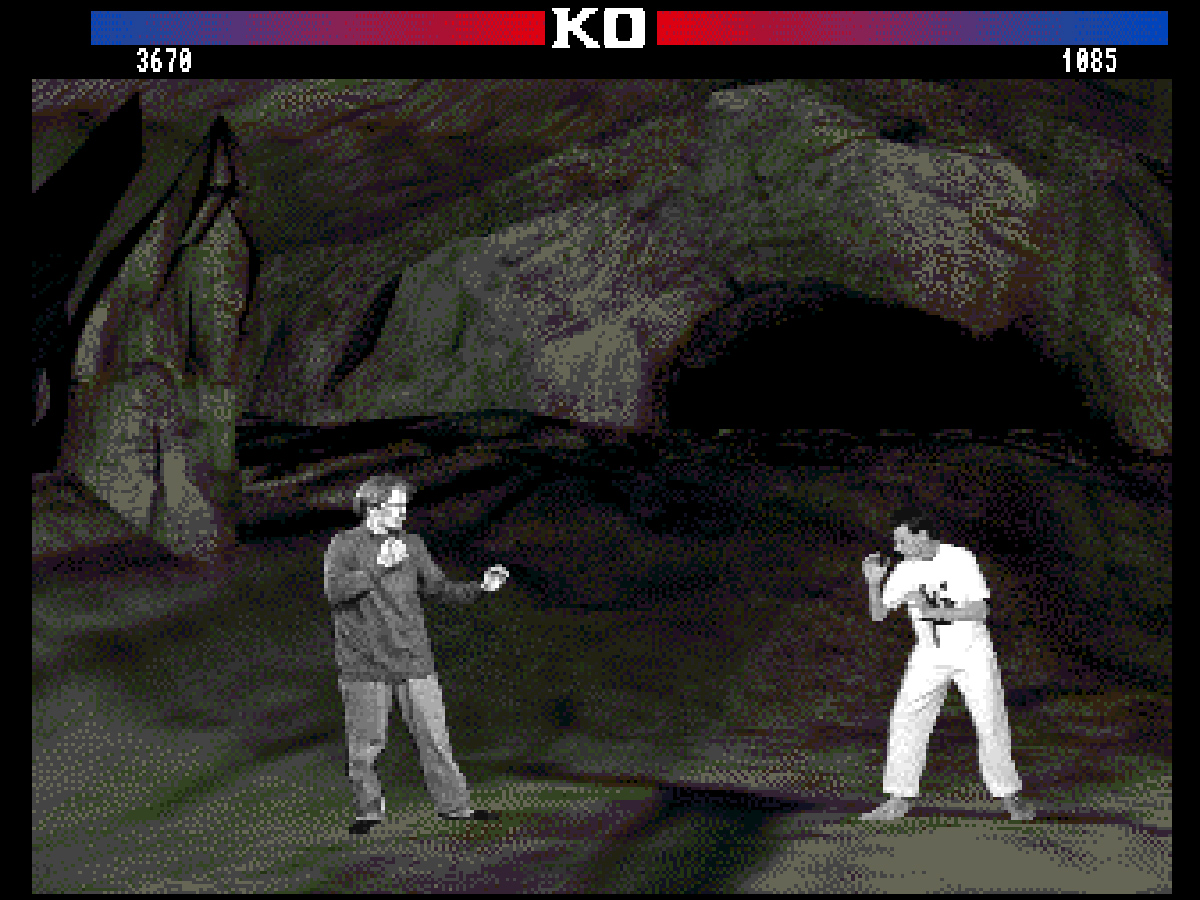

Mindless Violence (1995)
Personal project back in the Commodore Amiga days
Back in high school, a friend and I made a fighting game on the Amiga very much inspired by Street Fighter II and Mortal Kombat.
My friend rendered a couple of 3D backgrounds (either in Imagine or trueSpace) and acted as one of the fighters, and I did all the other stuff (coding, CPU AI fighters, music, UI) including capturing frames (with a black and white non-realtime capture system) off our VHS-recorded moves in my lounge room and masking them out, aligning anchor points, etc.
We also recorded short intro movies for our characters in the title sequence, and I wrote my own video streaming code (in AMOS!) that could embed a half-size 10-fps video with sampled audio inside an active title sequence UI.
A 1997 revision included CD Audio once I bought a Windows PC and CD burner.
Project started in AMOS on the Amiga 500,
then continued development in AMOS Professional on Amiga CD32 (with SX-1 expansion).